The Knee Joint Capsule: The Hidden Key to Long-Term Knee Health

The Knee Joint Capsule: The Hidden Key to Long-Term Knee Health

The Knee Joint Capsule: The Hidden Key to Long-Term Knee Health

Why Your Knees Lose Flexibility — and What No One Talks About

When most people think about knee health, they focus on strength training, stretching, or alignment.
But what actually controls how the knee moves, stabilizes, and feels is the joint capsule — the fibrous sleeve that surrounds the joint.

When this capsule becomes thick, dehydrated, or restricted, your knee can’t glide properly.
That’s when stiffness, pressure, and reduced range of motion begin — even if your muscles are strong and you stay active.

At Stretch Mobility Coaching™, we help restore knee capsule health through Joint Optimization and Muscle Optimization using The Stretch Method® — a science-based process that keeps your joints healthy and moving for life.

Why the Joint Capsule Is the Missing Link in Longevity

Healthcare tends to treat pain after it starts.
Fitness tends to build strength on top of dysfunction.
But neither approach has been trained to monitor and restore the health of the joint capsule itself — until now.

As the founder of The Stretch Method® and Stretch Mobility Coach™, I’ve spent years studying how the capsule responds to specific types of mechanical load, muscle activation, and cellular recovery.
Here’s what science tells us happens inside the body when we apply our proprietary process of joint optimization, muscle optimization, and red-light support.


1. The Anatomy of the Knee Joint Capsule

The knee joint is a synovial hinge joint that connects three bones:

1. Femur (thigh bone)

2. Tibia (shin bone)

3. Patella (kneecap)

It allows flexion (bending) and extension (straightening) with a small amount of rotation when the knee is bent.

Surrounding these bones is the joint capsule, made of two main layers:

1. Fibrous Outer Layer – dense connective tissue that provides passive stability and blends with ligaments.

2. Inner Synovial Membrane – a thin, vascular lining that produces synovial fluid, which lubricates the joint and nourishes cartilage.

Together, these layers maintain a sealed, pressurized environment that allows the femur and tibia to slide and glide smoothly during motion.

2. The Capsule’s Three Key Roles

  1. Passive Stabilizer
    The fibrous layer resists excessive joint motion, protecting ligaments and cartilage when muscles are relaxed.

2. Sensory Organ
The capsule contains mechanoreceptors and proprioceptors that communicate with the nervous system, helping your body control movement and balance.

3. Fluid Regulator
The synovial membrane maintains and circulates synovial fluid, which reduces friction and delivers nutrients to the cartilage

When the capsule stiffens or loses elasticity, these systems begin to fail — movement becomes restricted, proprioception dulls, and joint nutrition declines.

3. How Slide and Glide Are Lost

Healthy movement depends on the femur rolling and gliding smoothly across the tibia.
When the capsule becomes fibrotic or dehydrated:

The fibrous tissue thickens and limits elasticity.
Synovial fluid circulation decreases.
Pressure builds inside the joint.
Muscles begin compensating to stabilize what the capsule no longer can.

The result?
A knee that feels “stuck,” heavy, or unstable — even in the absence of pain.

4. The Relationship Between the Fibrous Layer and Synovial Membrane

The synovial membrane depends on the fibrous layer for its blood supply.
Here’s the chain that keeps a joint healthy:

Blood flow -> Fibrous Layer -> Synovial Membrane -> Synovial Fluid -> Cartilage

When the fibrous layer loses its flexibility and hydration:

Capillary flow decreases.
The synovial membrane receives less oxygen and nutrition.
Synovial fluid production drops.
Cartilage receives fewer nutrients.

Over time, the joint environment becomes dry and under-nourished, leading to stiffness, reduced glide, and early cartilage wear.

That’s why movement truly feeds the joint — it keeps the capsule vascular and active.

5. How The Stretch Method® Restores Capsule Health

The Stretch Method® is designed to restore normal capsule movement and function through two complementary phases:

Joint Optimization

Applies controlled, multi-directional movement to the capsule.
Stimulates fibroblast activity and collagen realignment.
Restores hydration and reactivates synovial circulation.
Re-establishes slide and glide between the femur and tibia.

Muscle Optimization

Retrains surrounding muscles to stabilize through the new range.
Improves proprioception and joint control.
Prevents the capsule from returning to a restricted state.

This process is performed by Certified Stretch Mobility Coaches™, who use precise hands-on resets rather than passive stretching to restore natural tissue behavior.

The Timeline for Knee Capsule Remodeling

Joint capsule remodeling follows the biology of connective tissue turnover.
Change occurs gradually but progressively when consistent movement and activation are applied.

Phase

time frame

physiological focus

client results

Activation

0-4 weeks

Fibroblast activation and rehydration

Less stiffness and lighter movement

Remodeling

4–12 weeks

Collagen reorganization and fluid flow

Noticeable range improvement

Integration

3–6 months

Muscle re-education and proprioceptive recovery

Stronger, more stable knee

Stabilization

6–12 months

Full collagen maturation and capsule elasticity

Sustainable motion and confidence

Consistency across these phases ensures long-term restoration and protection of the knee joint capsule.

Signs of a Healthy vs. Unhealthy Knee Capsule

Healthy Capsule

  • Full, Smooth Motion
  • Proper Glide and Hydration
  • Balanced Muscle Activation
  • Good Join Awareness
  • Feels Light During Activity

UnHealthy Capsule

  • Limited Flexion or Extension
  • Dry or Compressed Joint Feel
  • Muscel Guarding or Inhibition
  • Poor Proprioceoption
  • Feels Heavy, Stiff, or “blocked”

Protecting Your Movement Longevity

Healthy capsule motion is the foundation for every squat, step, and stride.
When the capsule is functioning, the joint is stable, the muscles respond faster, and the nervous system stays engaged.

Stretch Mobility Coaching™ doesn’t treat pain — it restores function at the joint level.
By improving the capsule’s ability to move and nourish itself, we help you protect flexibility, preserve joint longevity, and keep your body ready to move at any age.

The health of your knee joint capsule determines how your knee ages.
A healthy fibrous layer feeds the synovium, the synovium nourishes the cartilage, and motion keeps the system alive.
When we restore that cycle, we restore movement longevity.
Find a Certified Stretch Mobility Coach™ and learn how The Stretch Method® helps restore joint capsule health and long-term flexibility.

The Hidden Key to Movement Health: How the Joint Capsule Remodels and Why Stretch Mobility Coaches™ Are Leading the Way

The Hidden Key to Movement Health: How the Joint Capsule Remodels and Why Stretch Mobility Coaches™ Are Leading the Way

The Hidden Key to Movement Health: How the Joint Capsule Remodels and Why Stretch Mobility CoachesAre Leading the Way

The Overlooked Foundation of Flexibility and Movement Health

If you’ve been told that stretching, yoga, or mobility drills are enough to keep you flexible, here’s the truth:
they’re missing the most important structure in your body — the joint capsule.

The joint capsule surrounds every joint in your body like a flexible sleeve. It’s made of collagen, elastin, and ground substance — the same materials that give your tissues their strength and elasticity.
When the capsule is healthy, your joints glide smoothly, your muscles activate efficiently, and your body moves freely.

But when it becomes dehydrated or stiff, it starts restricting movement from the inside out. That stiffness is what people often call “aging” — but it’s actually early capsular fibrosis, a silent decline in movement health that starts long before pain or pathology appear.

At Stretch Mobility Coaching™, we address this missing link.


Why the Joint Capsule Is the Missing Link in Longevity

Healthcare tends to treat pain after it starts.
Fitness tends to build strength on top of dysfunction.
But neither approach has been trained to monitor and restore the health of the joint capsule itself — until now.

As the founder of The Stretch Method® and Stretch Mobility Coach™, I’ve spent years studying how the capsule responds to specific types of mechanical load, muscle activation, and cellular recovery.
Here’s what science tells us happens inside the body when we apply our proprietary process of joint optimization, muscle optimization, and red-light support.


Step 1: Joint Optimization — Reawakening the Capsule

When we apply gentle, multi-directional stretch to a non-plastic (still changeable) joint capsule, fibroblast cells sense the pressure and start remodeling the tissue. This process, known as mechanotransduction, triggers the breakdown of old, rigid collagen and stimulates the creation of new, more elastic fibers.

As hydration increases within the extracellular matrix, the tissue becomes smoother and more responsive. Clients describe this stage as feeling “lighter” or “freer” — and that’s exactly what’s happening. The joint is regaining its natural glide.

“We’re not just stretching; we’re signaling your body to reorganize itself from the inside out.”

Step 2: Muscle Optimization — Resetting the System

Once the capsule regains elasticity, we focus on muscle optimization. This means reactivating the muscles that support that joint, retraining them to fire through the newly restored range.

During this stage, proprioceptors — the sensors that tell your brain where your body is in space — reawaken. Your nervous system relearns healthy movement patterns, restoring balance and control that most adults unknowingly lose over time.

This isn’t strength training. It’s neuromuscular re-education — teaching your body how to move efficiently again.

Step 3: Cellular Support — Healing from the Inside with Red Light

To accelerate this natural repair process, Stretch Mobility Coaches™ integrate red light therapy (also known as photobiomodulation).
This technology uses specific wavelengths of red and near-infrared light to stimulate the mitochondria — the energy centers of your cells.

Research shows this can:

Increase ATP production (cellular energy)
Reduce oxidative stress
Support collagen formation
Improve circulation and decrease inflammation

In plain terms: red light creates a healthier environment for your joints and muscles to heal.

When combined with Stretch Mobility Coaching™, it enhances recovery, supports tissue regeneration, and sustains the progress you’ve made during joint and muscle optimization.

How Long It Takes to See Change

Joint capsule remodeling follows the same biological timelines as other connective tissues — slow, steady, and permanent when done right.

Phase

time frame

what happens

what you feel

Activation

0-4 weeks

Fibroblasts wake up; tissue begins rehydrating

Looser, lighter motion

Remodeling

4–12 weeks

Collagen reorganizes and cross-links realign

Noticeable flexibility returns

Integration

3–6 months

Muscles retrain through full range of motion

Smoother, more stable movement

Stabilization

6–12 months

Capsule completes full collagen turnover

Long-lasting mobility and strength

Consistency is everything.
This process takes 6–12 months for the capsule to remodel fully, but most clients notice functional improvements in the first 8–12 weeks.

Why Stretch Mobility Coaches™ Are Leading This Movement

Stretch Mobility Coaching™ was born from a simple truth:
No one was teaching how to restore movement health before the body breaks down.

Physical therapy treats dysfunction.
Fitness training builds strength.
But the middle ground — the space between health and pathology — was empty.

Stretch Mobility Coaches™ fill that gap.

Through our proprietary MAPP Testing™ system, we identify early signs of unhealthy movement, muscle inhibition, and capsular stiffness — long before they cause pain or limit performance.
Then, we guide clients through a progressive Reset->Refire->Stabilize->Strengthen approach that restores healthy flexibility and preserves muscle health for life.

We don’t chase pain.
We optimize movement.

That’s the difference.

The Future of Movement Longevity

The future of wellness isn’t reactive — it’s preventative and performance-driven.
By protecting the joint capsule, we protect everything built around it: muscle strength, coordination, recovery, and confidence in movement.

At Stretch Mobility Coach™, we believe flexibility is a biomarker of aging — one that can be measured, restored, and maintained through science-backed, hands-on methods.

The result?
A body that’s not just pain-free, but ready to move — at every age.

“When you invest in your flexibility health, you’re not just stretching — you’re rebuilding the foundation of movement longevity.”

Feeling tired, stiff, or like your body is “just aging” is not your fate.

That’s your body saying it lost readiness—and it needs your attention.

You are not defined by a diagnosis—or the absence of one. You have control.

Joints. Muscles. Readiness.
That’s not just your pathway. That’s your advantage.

If you’re ready to stop modifying and start thriving, book your unlock your flexibility demo today. Your body—and your future self—will thank you.

Why You Might Need a Physical Therapist, a Chiropractor, or a Stretch Mobility Coach: Understanding the Differences

Why You Might Need a Physical Therapist, a Chiropractor, or a Stretch Mobility Coach: Understanding the Differences

Why You Might Need a Physical Therapist, a Chiropractor, or a Stretch Mobility Coach:
Understanding the Difference

When it comes to keeping your body moving well, different professionals play different roles. Here’s how each one helps and why you might need them:


Kim Nartker stretching a patient's leg

Why It Happens—The Real Reason You're Feeling “Old”

Physical Therapist

You’d seek a physical therapist if you’re recovering from an injury, surgery, or dealing with a diagnosed condition. They specialize in treating dysfunction, easing pain, restoring your motion, and rebuilding strength where it’s needed most. Their work is targeted and clinical, aimed at getting you back to function after you’ve been hurt or limited.

Chiropractor

A chiropractor is your go-to if you’re dealing with joint restrictions or misalignment, particularly in the spine. Their adjustments are quick and can relieve pressure, improve mobility, and reduce pain. They’re especially helpful when the problem is mechanical and you need that joint to move freely again.

Stretch Mobility Coach

We’re here when you want to optimize your joint and muscle health for the long run. We focus on the joint capsule, activate and strengthen the muscles around it, and progressively build your skeletal muscle health. We’re not waiting for dysfunction; we’re preventing it. We help keep you moving optimally and can even step in after rehab to keep you strong and flexible.

Stretching or Massage

Stretching and massage can feel really good and give temporary relief by relaxing muscles or improving circulation, but they don’t address the root cause of that pain or stiffness. A Stretch Mobility Coach is focused on identifying unhealthy joint and muscle patterns that cause that recurring pain. We’re not just relaxing the muscles; we’re optimizing your joint health, activating the right muscles, and strengthening them in a way that lasts. So if someone wants to get rid of pain long-term and move better, seeing a Stretch Mobility Coach is key, because we’re addressing the deeper causes, not just the symptoms.

Personal Trainer

MAT, or Muscle Activation Techniques, done by a personal trainer, can help reactivate muscles that aren’t firing well. That’s great for improving muscle function, but it doesn’t necessarily address the health of the joint capsule or the long-term flexibility of the joint.

A personal trainer can then strengthen muscles, but they’re usually working with the muscles that are already active and within a range of motion that’s available. What’s different about seeing a Stretch Mobility Coach is that we focus on the joint capsule first—so we optimize that joint health. Then we activate and strengthen muscles around that healthier joint, so you’re not just working with what you have—you’re expanding what your body can do. So someone working with MAT and personal training could benefit from a Stretch Mobility Coach to make sure their joints are healthy, flexible, and ready to support all that muscle work.

How to Know if Your Joint Capsule is Too Fibrotic to Change

Maybe you have done PT, Chiro, massage and everything else, you’ve even been to the surgeon and they are ready to cut on you but you don’t have pain so you are waiting. During that time your capsule may or may not be in the plastic no turning back period, but it also may not. MRI’s can show thickening in the joint capsule and PT can test to see and tell you clinically that your capsule is firm, but that may not mean it is in the plastic phase that can not be restored.

A Stretch Mobility Coach will  assess how your joint responds over time. A Stretch Mobility Coach sessions are not cut off my insurance with slow progress like other disciplines of care.  If there’s no improvement in flexibility after consistent work, it may be in that plastic, diseased state. 

How Long Does It Take to Build Back Muscle Before That Plastic State?

If you’re working with a Stretch Mobility coach right before that phase, it could take 6-12 months of consistent effort. The joint needs flexibility, muscles need activation, and the body needs time. Reassess at 6 months, and if there’s progress, keep going. If not, reconsider.

With consistent isolation exercises, resets like red light, and weekly Stretch Mobility Coaching optimization sessions, even small progress is a good sign. If there’s improvement in 6 months, continue. If not, you may stop then. As long as there’s some progress, even slow, you’re on the right track! When you are in an in-between phase, there is still a chance you can see improvements that will last when you put in the work and do all things needed to restore better joint capsule health. 

All Pieces of the Puzzle

Each of us plays a vital role in your movement. Physical therapists help you recover, chiropractors help you align and move freely, and Stretch Mobility Coaches keep your body ready for life. We keep you game day ready, yoga ready, sport ready, dance ready, and even walking ready. Together, we ensure your body stays ready to move and thrive.

Feeling tired, stiff, or like your body is “just aging” is not your fate.

That’s your body saying it lost readiness—and it needs your attention.

You are not defined by a diagnosis—or the absence of one. You have control.

Joints. Muscles. Readiness.
That’s not just your pathway. That’s your advantage.

If you’re ready to stop modifying and start thriving, book your unlock your flexibility demo today. Your body—and your future self—will thank you.

What Aging Decline Really Looks Like in Your 40s and 50s — and What You Can Do About It

What Aging Decline Really Looks Like in Your 40s and 50s — and What You Can Do About It

What Aging Decline Really Looks Like in Your 40s and 50s —
What You Can Do About It

You’re in your prime—or you should be enjoying it. Instead, you feel like you need to nap just to get through the day. Workouts are painful, and stretching feels like a pre-requisite just to move. Strength training? Forget about it—everything hurts afterward.

This isn’t normal aging. It’s a decline in movement readiness, and you can turn it around. Whether you’re dealing with joint pain, mobility issues, or looking to improve flexibility, you don’t need to settle for stiffness.

Kim Nartker stretching a patient's leg

Why It Happens—The Real Reason You're Feeling “Old”

Flexibility decreases

Joints lose glide, capsules stiffen, stabilizer muscles go silent.

Muscle mass declines

About 1% per year after age 50 Texas Health Resources.

The Result

Fatigue, constant need for stretching, modifying workouts, poor sleep, and endless aches.

These aren’t badges of aging—they’re signs you’ve lost readiness.

Stretching Isn’t Enough – You Need a Different Strategy

Old-school fixes like stretching routines, foam rollers, or massage feel good—temporarily. But they don’t restore joint health or muscle activation.


Even more generic strength training can backfire if your joints haven’t regained proper mobility.

The Result

You’ve been doing steps two and three without clearing step one. That’s why it keeps hurting.

Can People with Chronic or Autoimmune Conditions Do This Too?

Absolutely. Many believe only licensed doctors or PTs can help them. But licensed healthcare—insurance-based care—doesn’t focus on proactive longevity or mobility. It reacts only after things break.

That’s where Stretch Mobility Coaching fits in.

We don’t diagnose or prescribe.

We test and reset flexibility, mobilize joints, and reactivate muscles.

If we spot medical red flags, we refer you back to your provider.

So whether you have rheumatoid arthritis, hypothyroidism, or no diagnosis but feel “fragile,” you do have control. You can restore readiness.

The Research Backs It Up

Active Man Running

Joint-specific flexibility drops with age—especially in shoulders and trunk—highlighting that mobility, not just strength, matters PMC.

Man Playing Baseball

Movement—consistent, joint-safe movement—slows flexibility decline and supports mobility PMC.

Happy Mature Women Having Fun On Swing

And get this: better flexibility correlates with longer lifespan, even when age and health are accounted for Fortune.

It’s not just an anecdote—this is science.

What You Can Do Right Now

You don’t have to wait until pain becomes a code on your insurance claim. Here’s your quick plan—no waiting list, no scripts:

Book an “Unlock Your Flexibility Demo”

Quick screening—test one area, optimize joints, wake a stabilizer.

If you respond well, move to a Kickstart Readiness Plan:

  • Baseline measures (flexibility, muscle mass, functional markers)

  • Goals for joint health, strength, stamina

Feeling tired, stiff, or like your body is “just aging” is not your fate.

That’s your body saying it lost readiness—and it needs your attention.

You are not defined by a diagnosis—or the absence of one. You have control.

Joints. Muscles. Readiness.
That’s not just your pathway. That’s your advantage.

If you’re ready to stop modifying and start thriving, book your unlock your flexibility demo today. Your body—and your future self—will thank you.

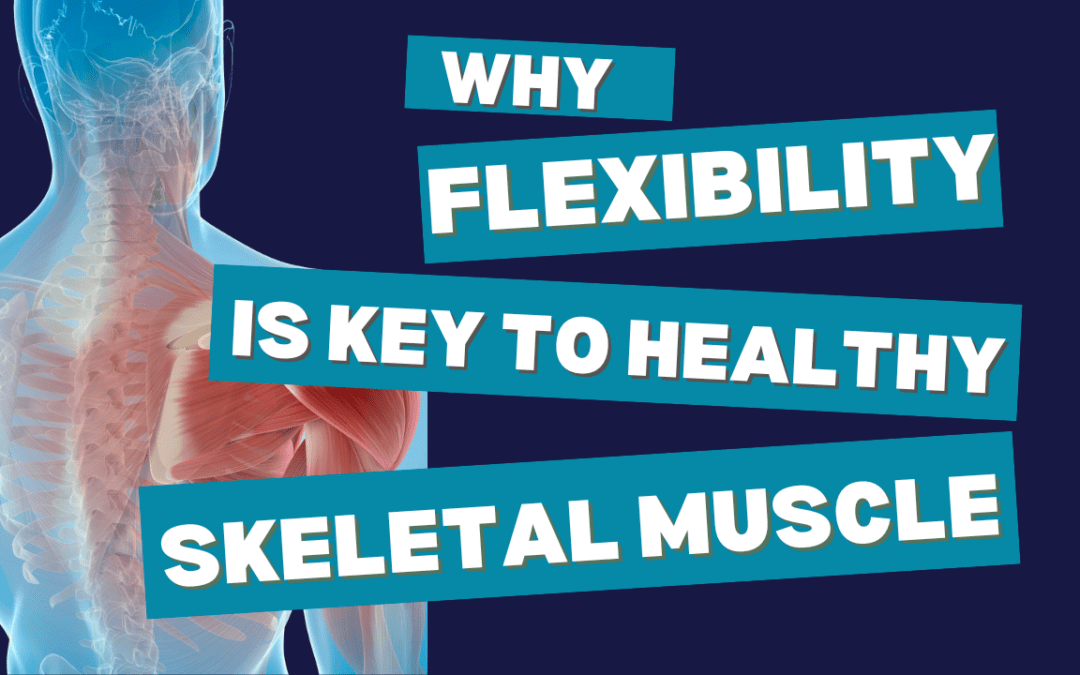
Flexibility: The Foundation of Healthy Skeletal Muscle Mass

Flexibility: The Foundation of Healthy Skeletal Muscle Mass

Flexibility: The Foundation of Healthy Skeletal Muscle Mass

Flexibility is about more than just being able to touch your toes or twist your body—it’s a critical component of overall muscle health and health in general.

When you lose flexibility, your body starts compensating in ways that can lead to a cascade of negative effects:

1. Restricted Flexibility Leads to Poor Movement Patterns

  • When your flexibility decreases, certain muscles become tight and overworked, while others weaken from disuse.
  • This imbalance causes unhealthy movement patterns, putting excessive stress on joints and other areas.
  • As a result, your body starts to move less efficiently, and simple activities can become more difficult or even painful.

2. Decreased Flexibility Can Cause Muscle Wasting (Atrophy)

  • Muscle wasting, or atrophy, happens when muscles aren’t used effectively or regularly.
  • Lack of flexibility initiates an unhealthy process that causes muscle wasting to occur. This limits how well you can activate and strengthen your muscles during movement or exercise.
  • Over time, this leads to the shrinking of muscle fibers and a decline in skeletal muscle mass we call this atrophy (muscle has wasted)

3. Muscle Wasting Impacts Your Ability to Build Muscle

  • Skeletal muscle isn’t just about strength—it’s essential for metabolic health, joint support, and maintaining good health.
  • When flexibility is compromised, your muscles become weak
  • This creates a cycle: less flexibility leads to less healthy joint movement, which leads to muscle wasting, making it harder to rebuild muscle over time.

4. The Bigger Picture: Loss of Flexibility Affects Longevity and Quality of Life

  • Poor flexibility doesn’t just mean stiffness—it can lead to chronic pain, chronic health problems, which leads to increased degenerative conditions, and increased muscle wasting through middle age. After age 60 these problems cascade and will lead to sarcopenia.
  • Muscle wasting and poor skeletal muscle health have been directly linked to decreased longevity, frailty, and loss of independence as we age.

How Stretch Mobility Coaching Helps Break the Cycle

At Stretch Mobility Coaching, we tackle this issue head-on.

  • By improving your flexibility, we restore proper healthy movement patterns that allow your muscles to activate as they should.
  • Our techniques don’t just help you feel more mobile; they create a foundation for rebuilding and maintaining healthy skeletal muscle mass.
  • Whether you’re looking to gain flexibility, play better, or just want to move with ease at every age, our method ensures you stay strong, flexible, so you can do everything in life you want to do.